CBSE Academics at Divine Happy School — How we teach — Nursery to Class XII, Bhagalpur
CBSE curriculum from Nursery through Class XII, with a learning system that connects the classroom, the home, and the parent.
Every system runs on the people behind it
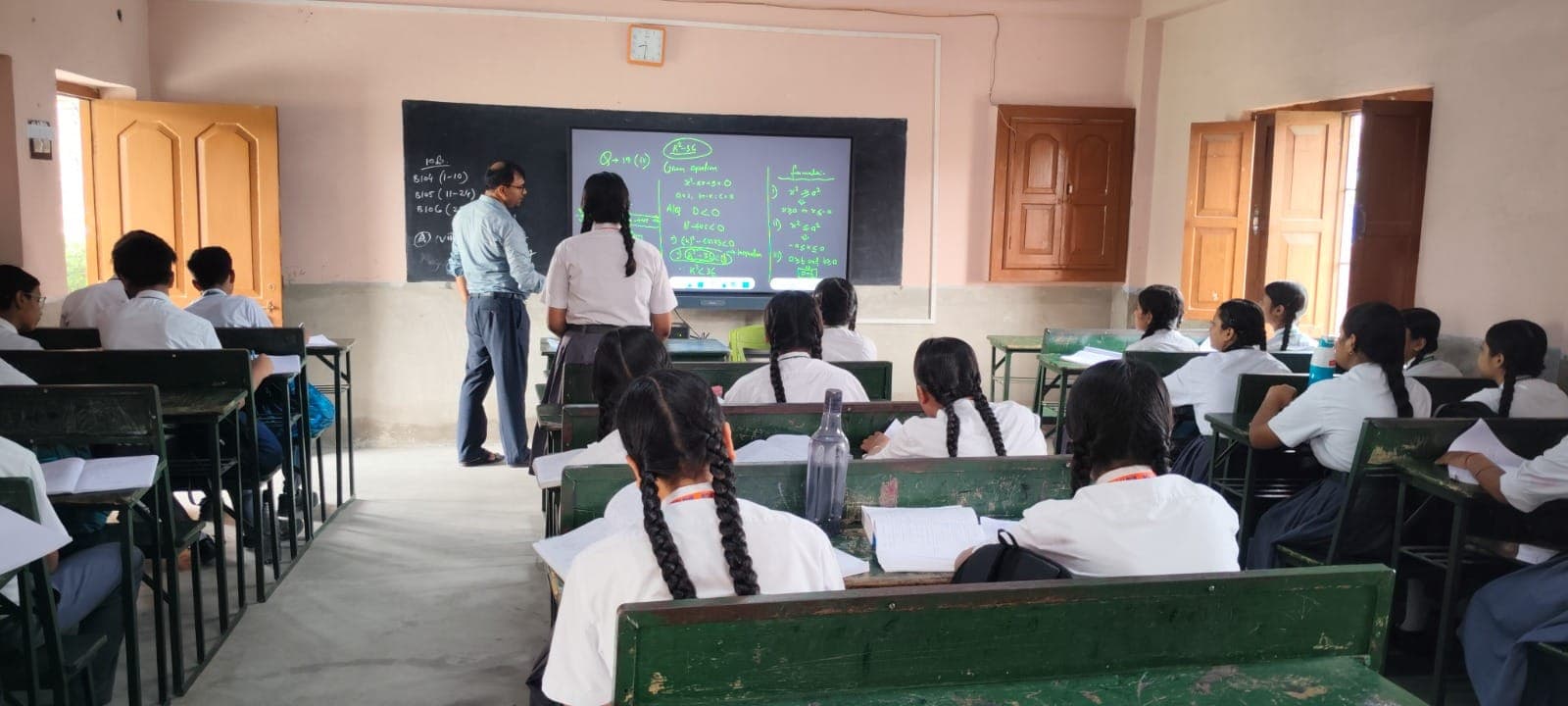
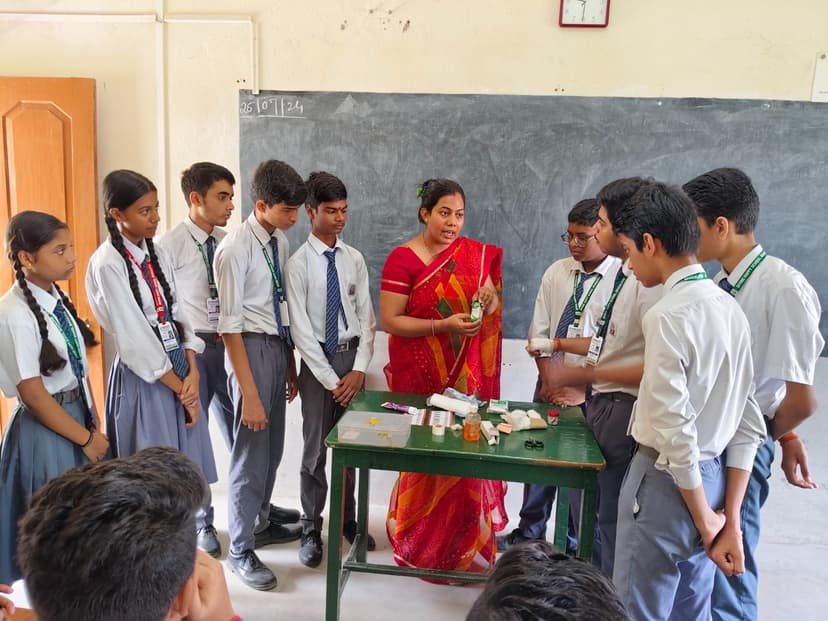
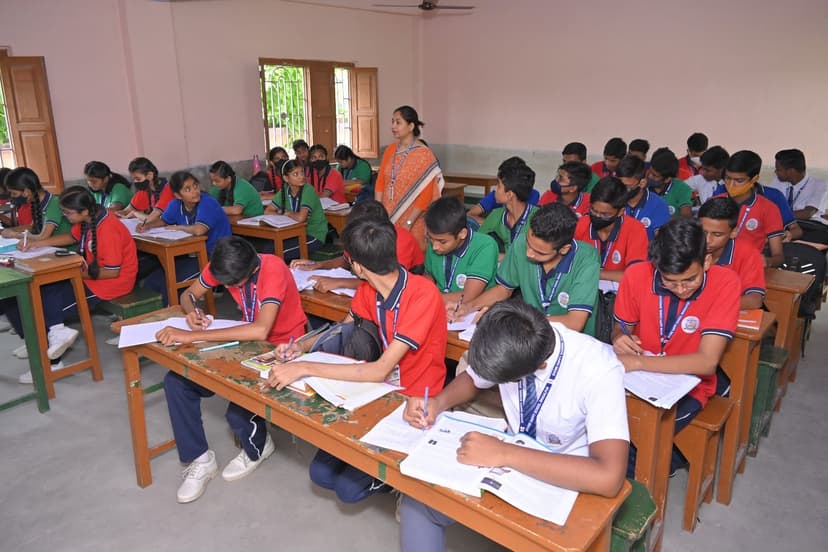
A school is only as strong as the teachers who show up every morning. At Divine Happy School, 70+ teachers walk into their classrooms each day with one job — to make sure every student leaves understanding more than they did when they walked in.
The school's faculty brings deep classroom experience, with many having served for over a decade. They have watched batches grow from nervous first-graders to confident board examinees. They know which concepts trip students up year after year, where to slow down, where to push harder, and when a child needs encouragement more than instruction. That kind of understanding isn't trained. It's earned over years of being in the room.
All teaching staff hold CBSE-mandated training certifications, with regular participation in workshops and professional development programmes. But what sets this faculty apart isn't paperwork. It's presence. The same teachers who deliver the lesson also mentor students through exams, guide them through co-curriculars, and build the kind of trust that keeps parents confident their child is in steady hands.
eVidya Smart Classroom — One connected system, from classroom to home
Most schools treat digital learning as a separate add-on. At DHS, the smartboard in the classroom and the eVidya platform at home run on the same content. What the teacher teaches is what the student revises. And Daily Academics makes the whole process visible to parents, every day, no login required.
This kind of connected learning system is rare in the region. Most schools use smartboards as standalone screens. At DHS, the smartboard, the home platform, and the parent dashboard are all part of one loop.
The classroom doesn't end at the school gate
Every topic taught on the smartboard is available on eVidya. The same lesson decks, the same explanations, the same sequence. Students revise at their own pace, practise with topic-wise questions, and assess their own understanding. No tuition needed.
eVidya currently covers Class VI through X across all major subjects, with content for younger grades expanding every year.
Interactive Study Suite
Every chapter, every topic — the same structured digital material your child interacts with on the smartboard in class, available in full on any device.
Select a subject to view actual curriculum material
What parents see, every school day
Daily Academics is updated by teachers each day. Select the class, section, and date to see what was taught in each period and what homework was assigned. No login, no registration, no app required.
Every period is listed by subject. You see the topic covered, the classwork done, and the homework assigned. It takes under a minute to check.
Chapter 7, "Snake Trouble," was revised. Students recorded word meanings in their notebooks, which were checked in class.
Learn the question-answers and word meanings for all chapters covered so far in preparation for the annual exam.
An oral revision test was conducted on Chapter 14, "Our Rights and Duties." Key concepts were discussed on the smartboard.
Learn the question-answers for Chapter 15 and revise the key terms from Chapter 14 for the upcoming revision test.
पाठ 5 और 6 के अभ्यास पत्र कक्षा में लिखाए गए। शब्दार्थ और वाक्य प्रयोग बोर्ड पर समझाए गए।
पाठ 4 और 5 के सभी प्रश्न-उत्तर और शब्दार्थ याद करके आइए। अभ्यास पत्र पूरा करें।
Chapter 11, "Force, Work, and Energy," was introduced. The definition of force with examples and different types were explained.
Review all topics discussed in class today and complete the "Let's Revise" questions in your notebook by tomorrow.
A revision test was conducted on Chapters 10–12. Students solved assigned problems and answers were discussed in class.
Revise Unit Test Paper 4 for tomorrow's test. Practise the word problems from Chapter 12 in your notebook.
Chapter 9 was taught — how to set a sprite's position, use rotation styles, work with pen blocks, and play instruments in Scratch.
Write the objectives of Chapter 9 in your notebook and practise creating a simple animation using pen blocks.
Beyond marks: how your child is really doing
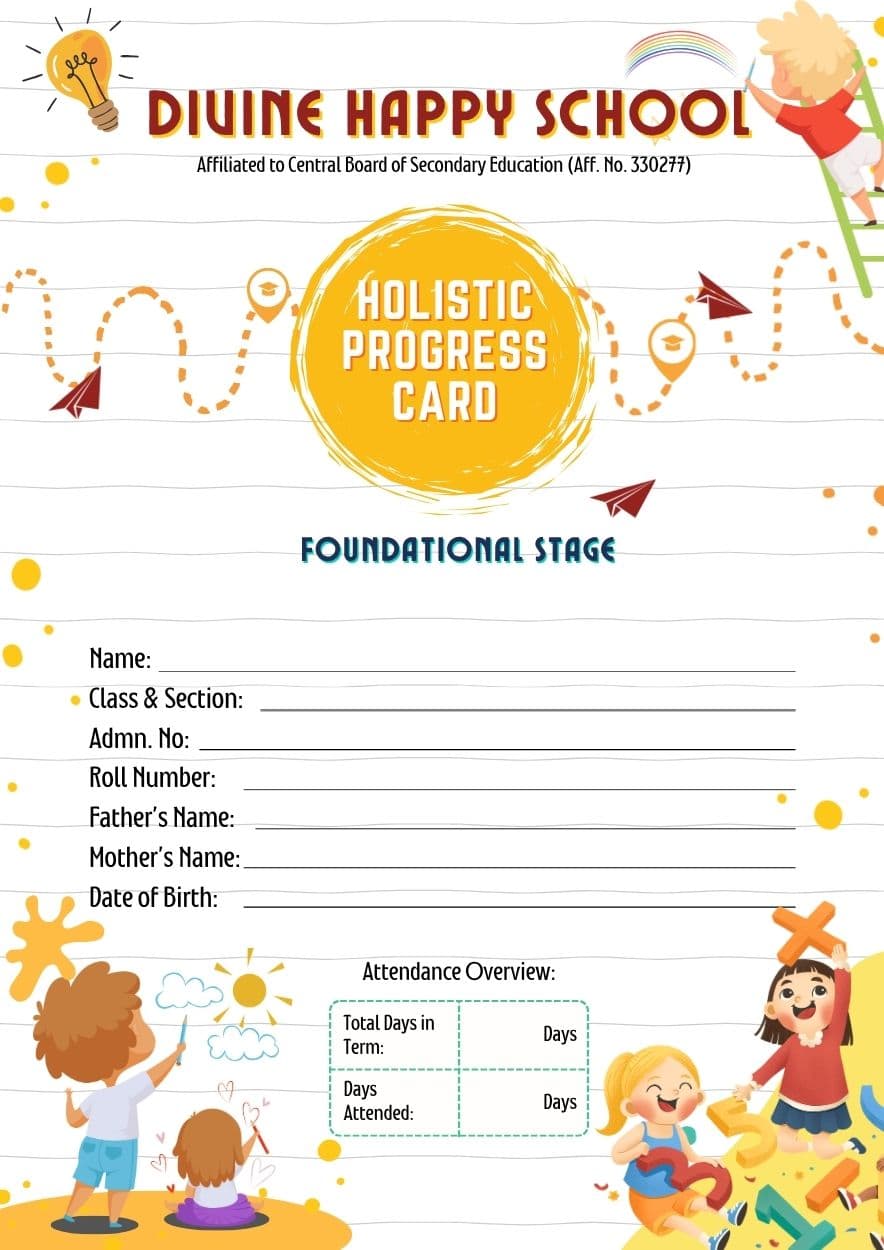
For Nursery through UKG, Divine Happy School replaces traditional marks-based report cards with a comprehensive Holistic Progress Card. Instead of asking “how much did my child score?”, the card answers a different set of questions: How is their cognitive development progressing? Are their motor skills on track? How do they express themselves creatively? How do they interact with others?
Each skill is assessed on a three-level scale — Beginner, Progressing, and Proficient — focused on identifying strengths and development areas, not ranking children against each other. The card also includes a parent feedback formand an “All About Me” page where the child shares their world in their own way.
CBSE Curriculum — Academics across every stage
The academic programme spans Nursery through Class XII, structured around the CBSE curriculum. Each stage builds on the last — beginning with play-based exploration in the early years and progressing through structured academics, board preparation, and stream specialisation.
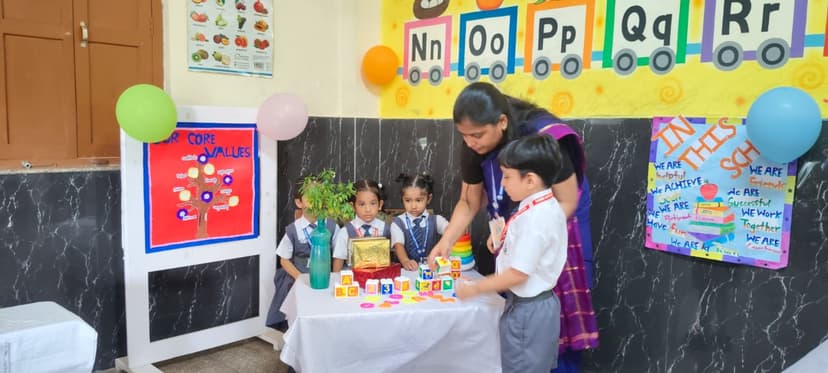
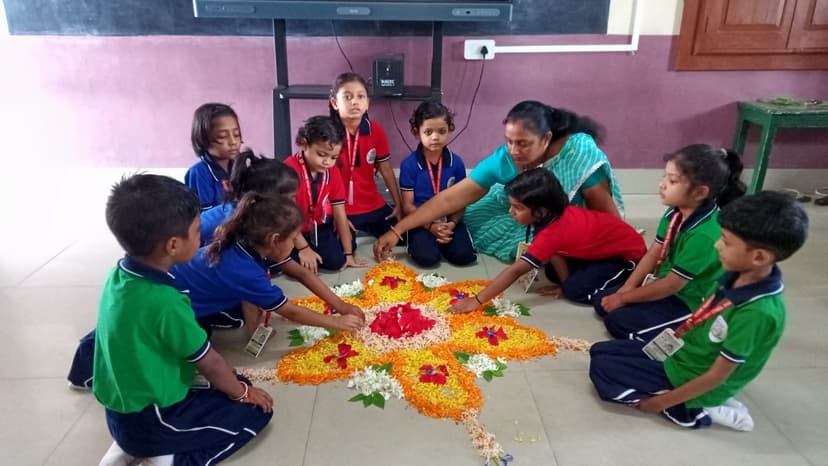
Play-based and activity-based learning with early academic familiarity. Class teachers guide every child through structured play, storytelling, art, and hands-on exploration. Smartboards support visual and interactive learning from the very beginning. Each child's growth is carefully assessed by their class teacher through the Holistic Progress Card.
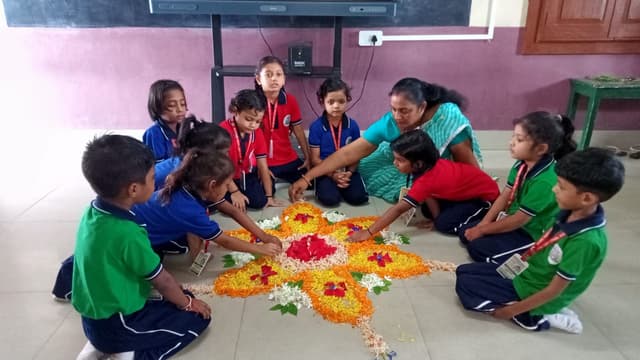
Core subjects: English (oral and written), Hindi (oral and written), Mathematics, EVS, General Science, General Knowledge. Computer Science from Class III. Sanskrit from Class V. Teachers at this stage focus on building reading fluency, conceptual numeracy, and the study habits that carry students through the harder years ahead. Competency-based questions and higher-order thinking are introduced early, not as exam preparation, but as a way of learning from the start.
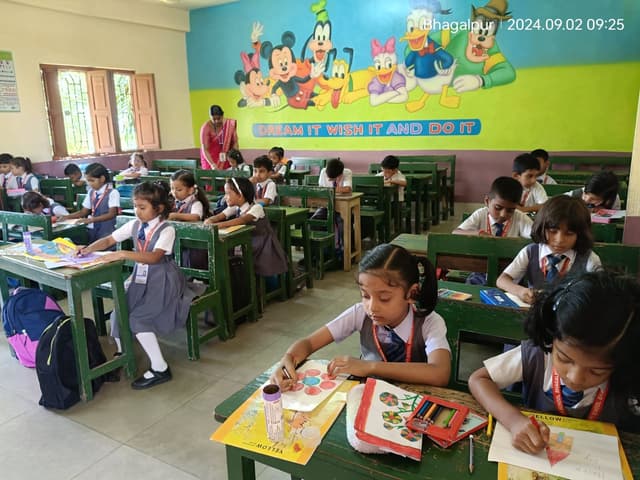
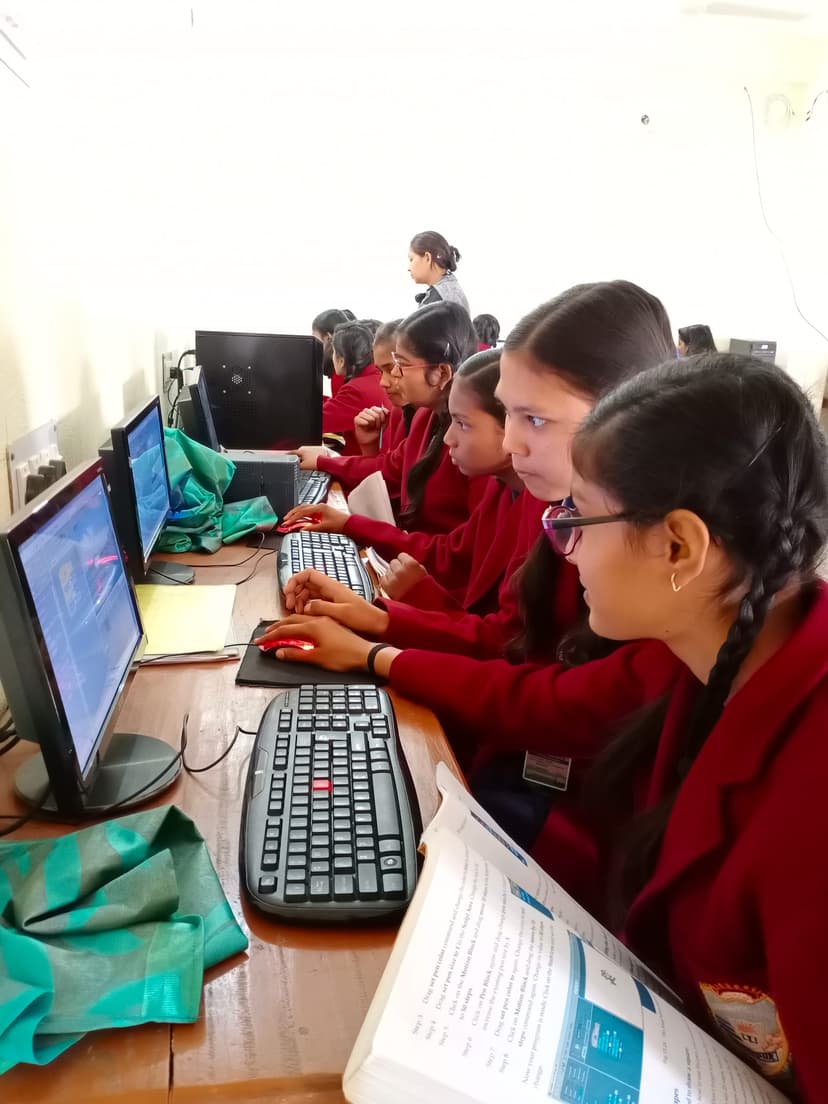
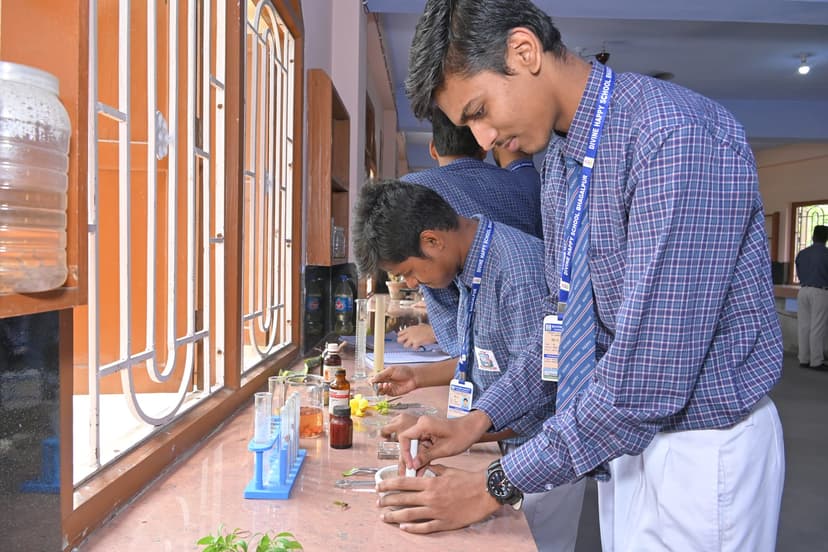
EVS splits into Science and Social Science. This is where academic rigour increases, and teachers lead every class using visual lesson decks on smartboards, the same material students access at home through eVidya for revision and practice. The depth of learning at this stage comes from faculty who know the CBSE framework deeply, not from the screens they teach on. Labs: composite science lab and computer lab.
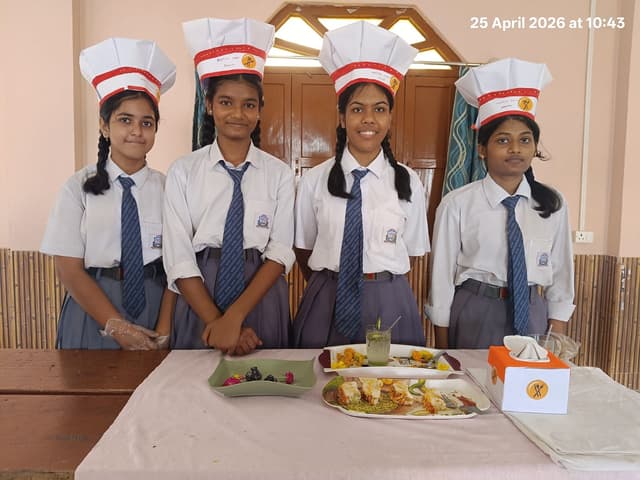
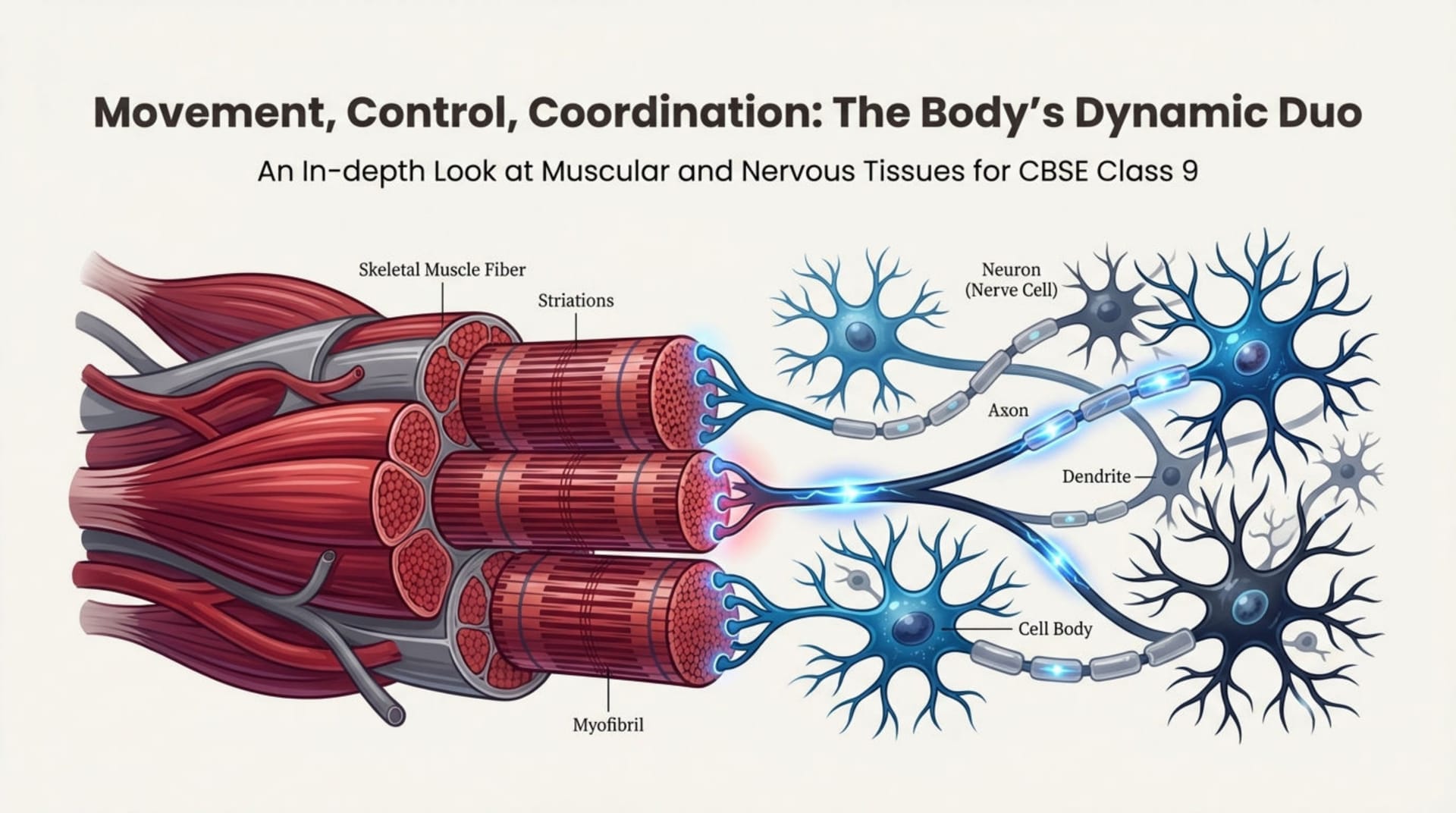
Board preparation begins in Class IX under teachers who understand CBSE exam patterns and the specific demands of the Class X board. eVidya supports their work. Every chapter is broken into its component topics, matching the sequence teachers follow in class. Students benefit from topic-level depth for revision and self-assessment, alongside regular unit tests, pre-boards, and practice papers. Academic counselling support available.
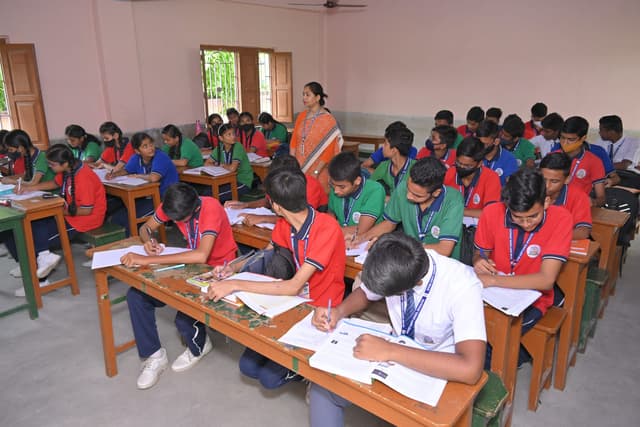
Streams: Science (PCM), Science (PCB), Commerce. Optional subjects: Computer Science, Physical Education, Music. All streams include English. Subject teachers at this level combine deep domain expertise with board exam technique. JEE/NEET preparation support runs alongside the regular CBSE curriculum. eVidya 2.0 is expanding to these grades.
| Stream | Core subjects | Optionals |
|---|---|---|
| Science (PCM) | Physics, Chemistry, Mathematics | Computer, PE |
| Science (PCB) | Physics, Chemistry, Biology | Computer, PE |
| Commerce | Accountancy, Business Studies, Economics | PE, Music, Computer |
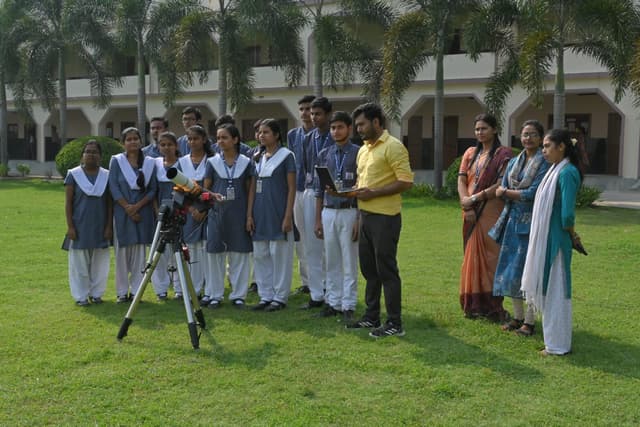
How we assess your child
| Assessment | Marks | Timing |
|---|---|---|
| Periodic Test 1 | 50 | Mid-Term 1 |
| Half-Yearly Examination | 80 | End of Term 1 |
| Periodic Test 2 | 50 | Mid-Term 2 |
| Annual Examination | 80 | End of Term 2 |
Beyond written exams, each term also evaluates notebook upkeep, subject enrichment activities, and co-curricular participation. Two parent-teacher meetings per year are aligned to the assessment cycle.
Report cards are shared at each PTM. The school follows the CBSE two-term pattern, with internal assessments contributing to the final grade.
Part of the week, not just the year
Co-curricular activities at DHS are part of the weekly timetable, not something saved for annual day. Sports, arts, and activity classes happen every week.
Weekly sports classes covering cricket, football, basketball, badminton, and athletics, rotated seasonally. Annual Sports Week for inter-house competitions.
Music room and art room in regular use. Dance, song, drawing, creative writing — building confidence alongside academics.
A weekly activity period for projects, group work, and hands-on learning that goes beyond the regular curriculum.
Events like the Science, Creative Arts and AI Exhibition combine academic subjects with creative expression and emerging themes.